
ENERGY SYSTEMS / PRODUCT STRATEGY · ARTICLE 04
The technology matters. But electrical integration, project economics, and product architecture often decide whether a solution succeeds commercially.
A battery container can perform exactly as specified and still be part of a disappointing energy storage project.
Why? Because customers don’t buy battery cells in isolation. They buy reliable megawatts, usable megawatt-hours, grid compliance, predictable commissioning, and long-term availability.
The market is moving quickly. According to the International Energy Agency, the world added 108 GW of battery storage capacity in 2025, up 40% from 2024. Most new capacity was utility-scale. For electrical equipment manufacturers, that growth creates an opportunity—but also a product management challenge.
The question is no longer just, “Can we build a better component?” It’s “Can we make the complete system easier to specify, integrate, deploy, and operate?”
1. Start with what the customer actually receives
Consider a 100 MW / 400 MWh storage project. On paper, it sounds like four hours of full-power delivery.
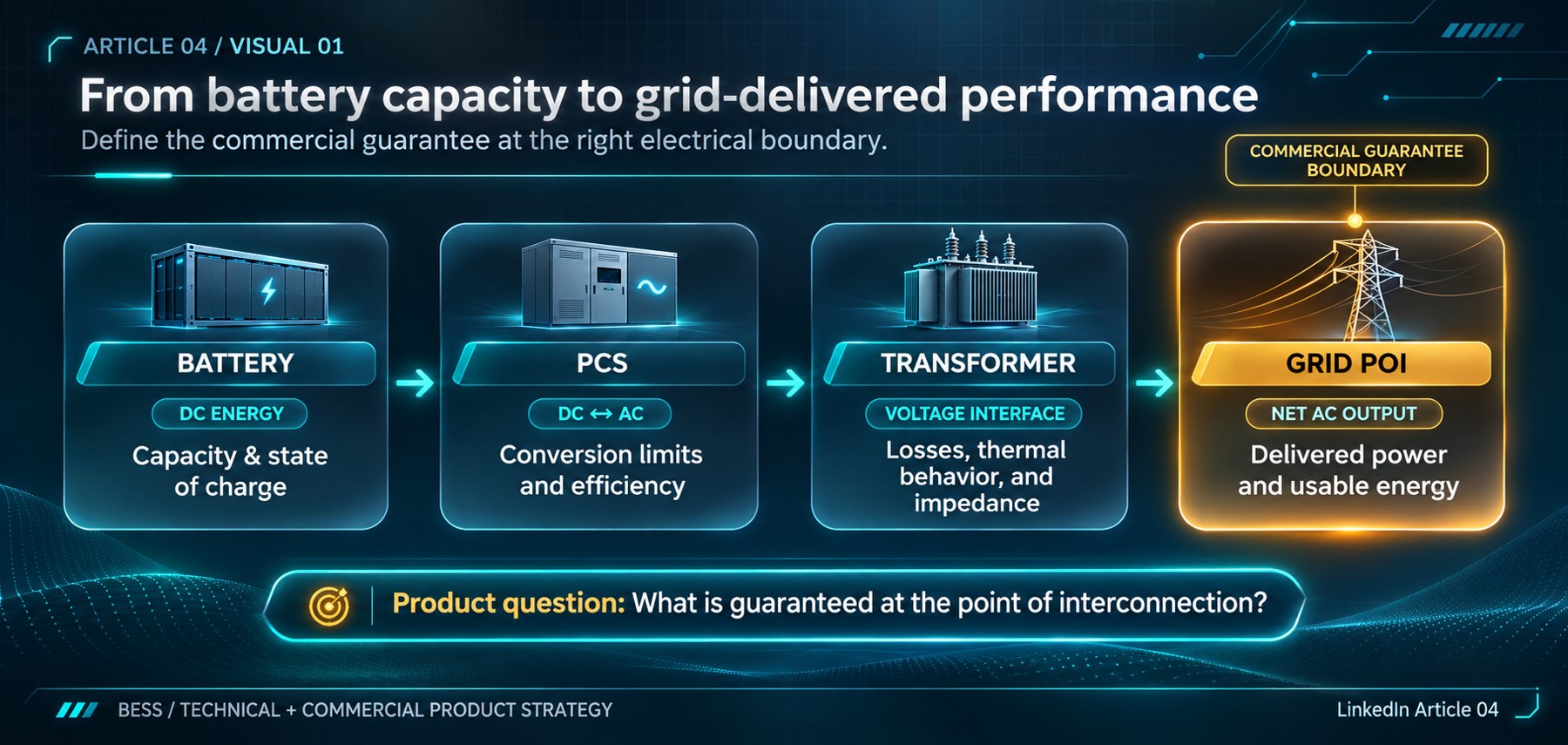
But where are those ratings measured: at the battery terminals, the inverter output, or the point of interconnection (POI)?
That boundary changes everything. A battery’s DC energy capacity is not the same as net AC energy delivered to the grid. Conversion losses, transformer losses, auxiliary loads, operating limits, and degradation can all affect performance.
A product manager should make the commercial promise explicit: What is guaranteed at the POI, under which conditions, and for how long?
A clear answer guides engineering requirements, acceptance testing, warranty terms, and customer expectations. An unclear answer creates disputes long after the purchase order.
It also distorts supplier comparisons. One proposal might emphasize DC nameplate capacity while another quotes net AC performance. Before comparing prices, procurement and product teams need to normalize what is being delivered.
2. Treat the transformer and PCS as one design conversation
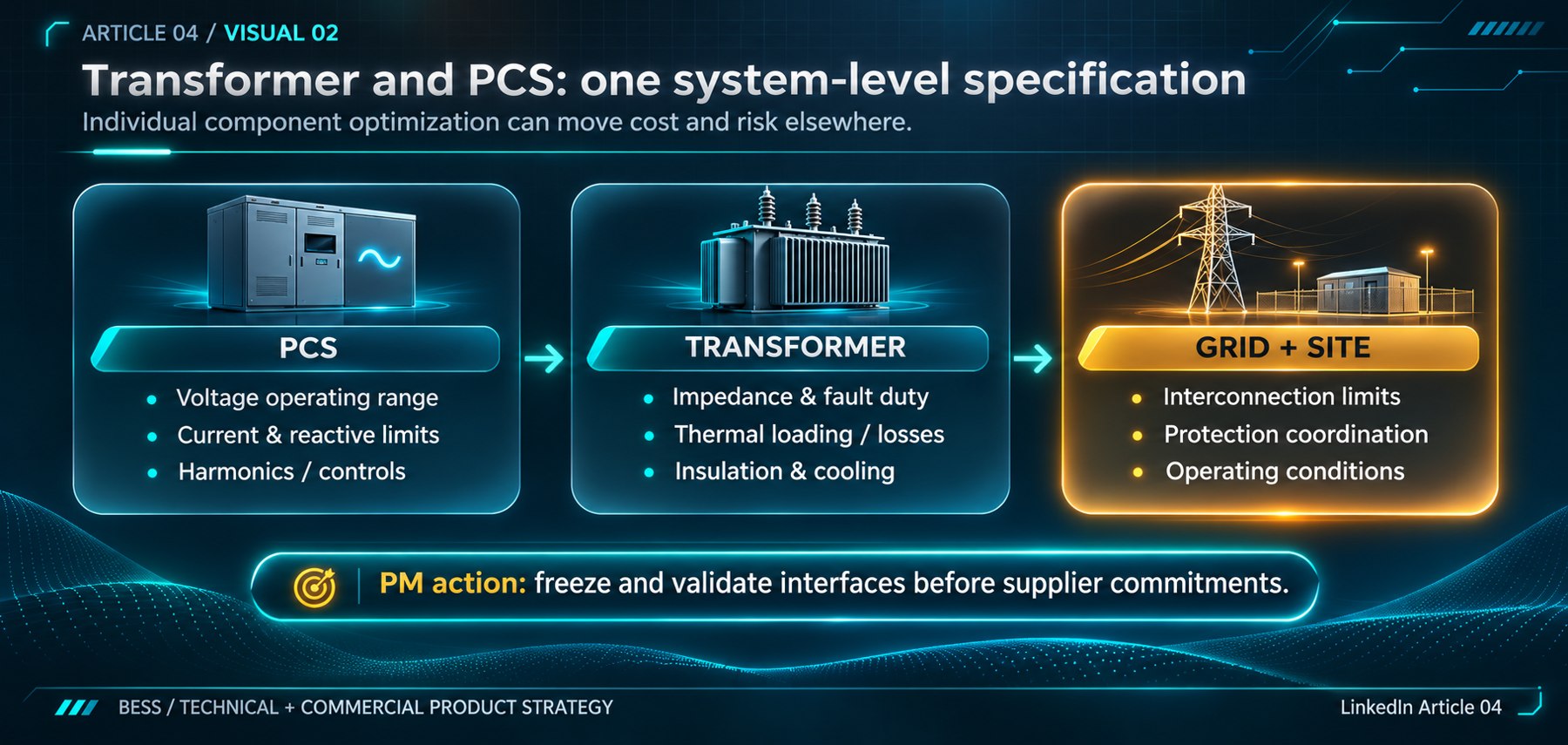
The Power Conversion System (PCS) controls bidirectional power conversion. The transformer connects that equipment to the required AC voltage level. Neither should be selected without considering the other.
Transformer impedance influences voltage regulation and fault behavior. Harmonics and operating duty cycles influence losses and heating. Converter controls, switching characteristics, filters, and protection settings affect how the complete installation behaves.
There is no universally correct “BESS transformer impedance” or one-size-fits-all hardware specification. The right selection depends on the actual converter, network, duty cycle, and grid requirements.
The commercial lesson is equally important: a component optimized for lowest purchase price may not produce the lowest-cost integrated system.
Product teams should involve applications engineering and key suppliers early, before major electrical interfaces become expensive to change.
One practical deliverable is a shared interface specification covering voltage ranges, loading assumptions, fault behavior, power quality, and responsibility for system validation.
3. Sell total project value, not only equipment price
Imagine two competing equipment packages.
Package A: lower upfront price, but customized engineering interfaces, longer commissioning, and more site-specific testing.
Package B: somewhat higher upfront price, but validated interfaces, standard documentation, and a repeatable commissioning process.
Package A might still win. But comparing price tags alone misses the real decision.
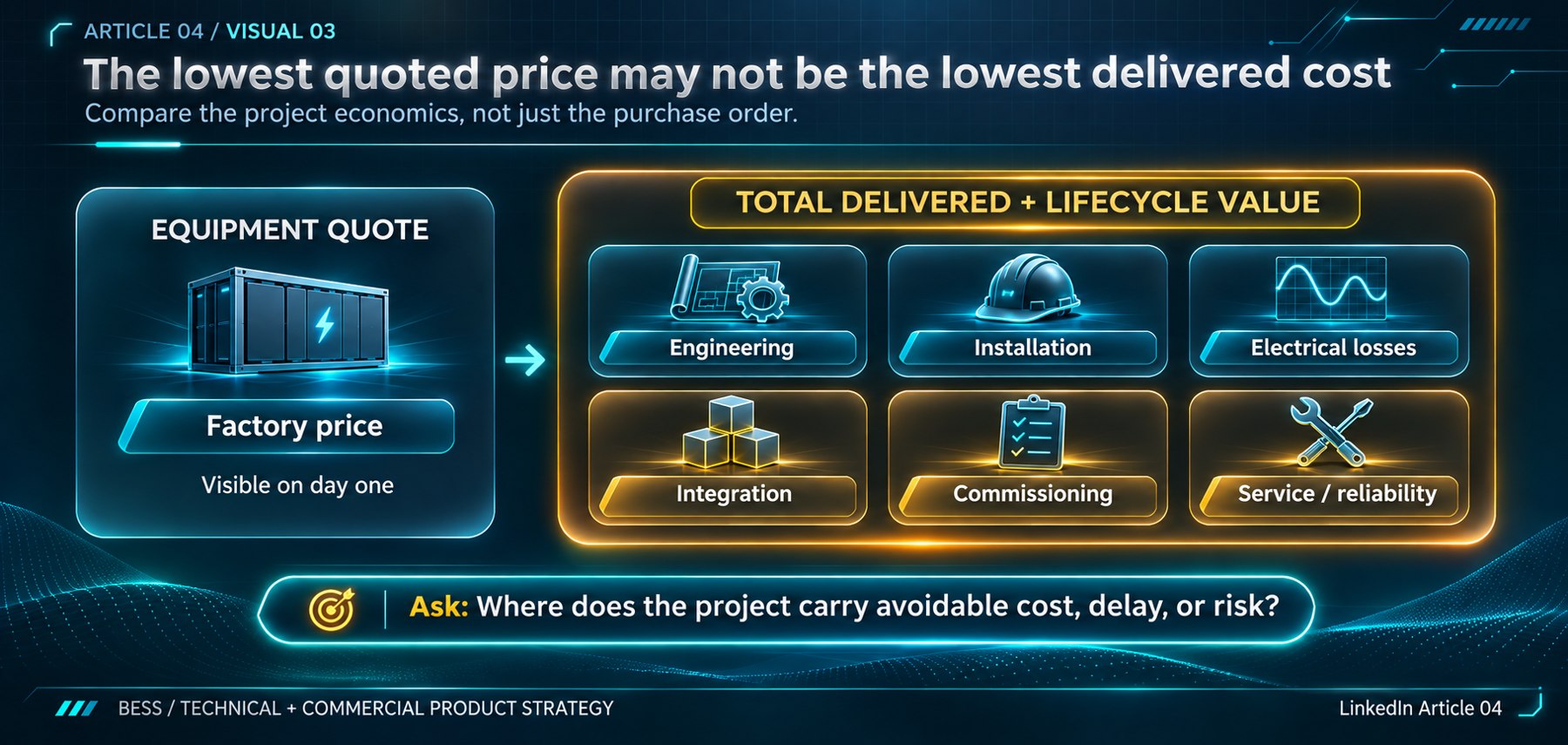
The customer sees more than factory equipment cost: integration engineering, installation, commissioning, electrical losses, service, and the risk of delays.
For product managers, the right question is: Which design reduces total delivered cost and execution risk for the target application?
That’s a stronger value proposition than promising a slightly cheaper transformer or converter. It also gives sales teams a credible way to discuss value without relying on vague “premium quality” claims.
A delayed commissioning date, for example, may affect contractual milestones and project economics even when the bill of materials stays unchanged. The impact must be assessed project by project, but it should not be ignored.
4. Standardize interfaces. Configure what genuinely varies.
Utility-scale projects aren’t identical. Grid voltage, protection requirements, climate, space constraints, regulations, and customer preferences vary by region and site.
Trying to standardize every detail would be a mistake. Custom-engineering every project from scratch is also hard to scale.
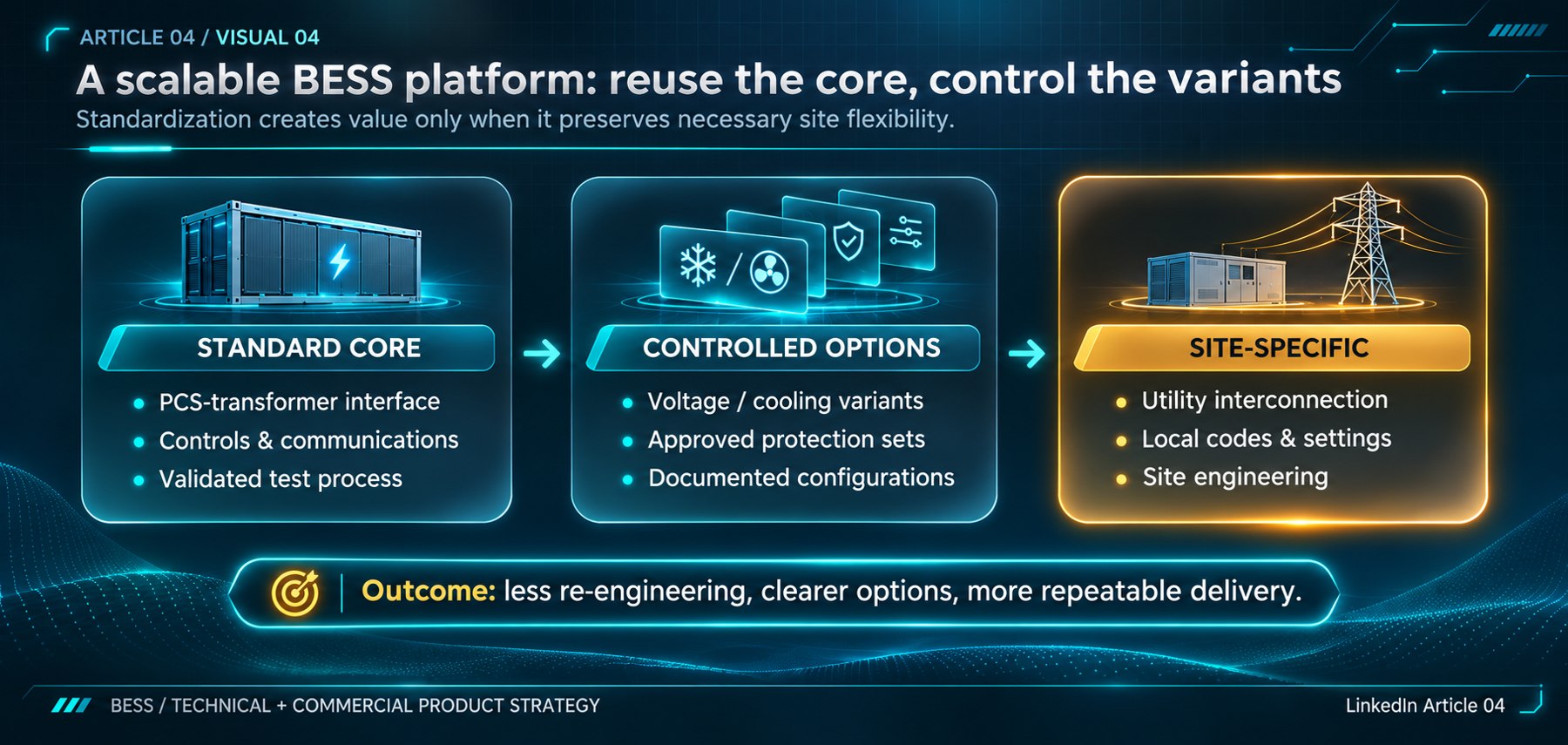
The better approach is a configurable platform:
- Standard core: validated PCS-transformer interfaces, communication architecture, testing methods, and documentation.
- Controlled options: voltage classes, cooling packages, enclosure features, and approved protection configurations.
- Site-specific engineering: interconnection studies, local code requirements, and utility-approved settings. For manufacturers, this can reduce repeated engineering, supplier variation, validation effort, and commissioning uncertainty.
The opportunity isn’t simply to sell more SKUs. It’s to reuse more proven engineering with every project.
That also requires governance. Teams need to know which options are prevalidated, which require additional testing, and which requests should remain custom projects. Otherwise, a “standard platform” gradually becomes a collection of exceptions.
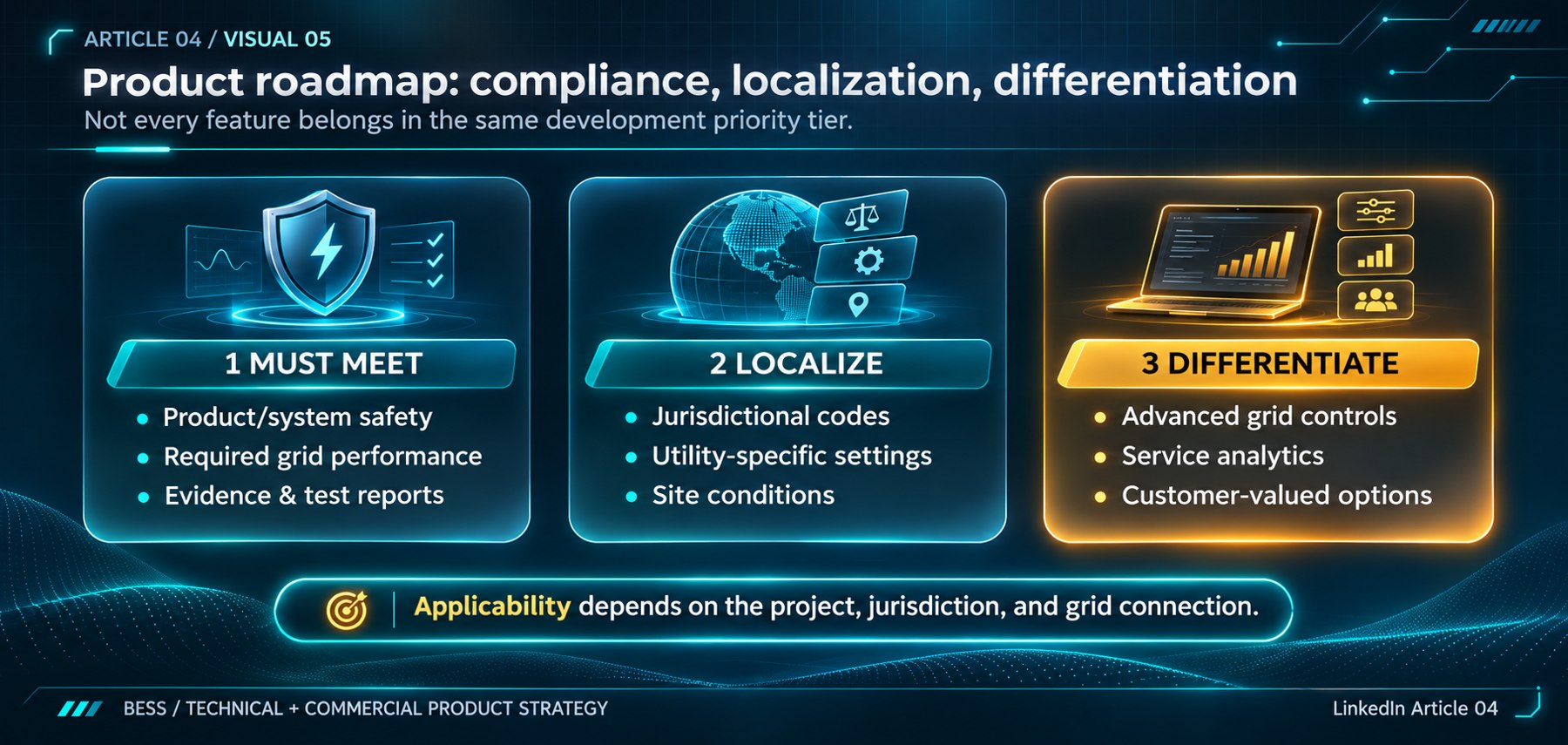
5. Turn compliance and grid capability into roadmap decisions
Safety and grid requirements are not paperwork to complete after product design.
For example, UL 9540 addresses energy storage system safety, UL 9540A defines a thermal-runaway fire test method, and NFPA 855 addresses installation requirements. Which editions and provisions apply depends on local adoption and project conditions.
For transmission-connected inverter-based resources, IEEE 2800-2022 establishes minimum performance requirements covering areas such as voltage and frequency ride-through and reactive power control.
These requirements can influence product architecture, testing budgets, documentation, and time to market.
Then come emerging capabilities such as grid-forming controls. They may be strategically valuable, but not every customer needs the same functionality immediately.
A product manager has to distinguish must-have compliance, market-specific requirements, and future differentiation—and fund the roadmap accordingly.
The release plan should include evidence—not just features: test reports, electrical models, documentation, and a clear owner for regulatory and customer approvals.
6. Measure the outcomes customers feel
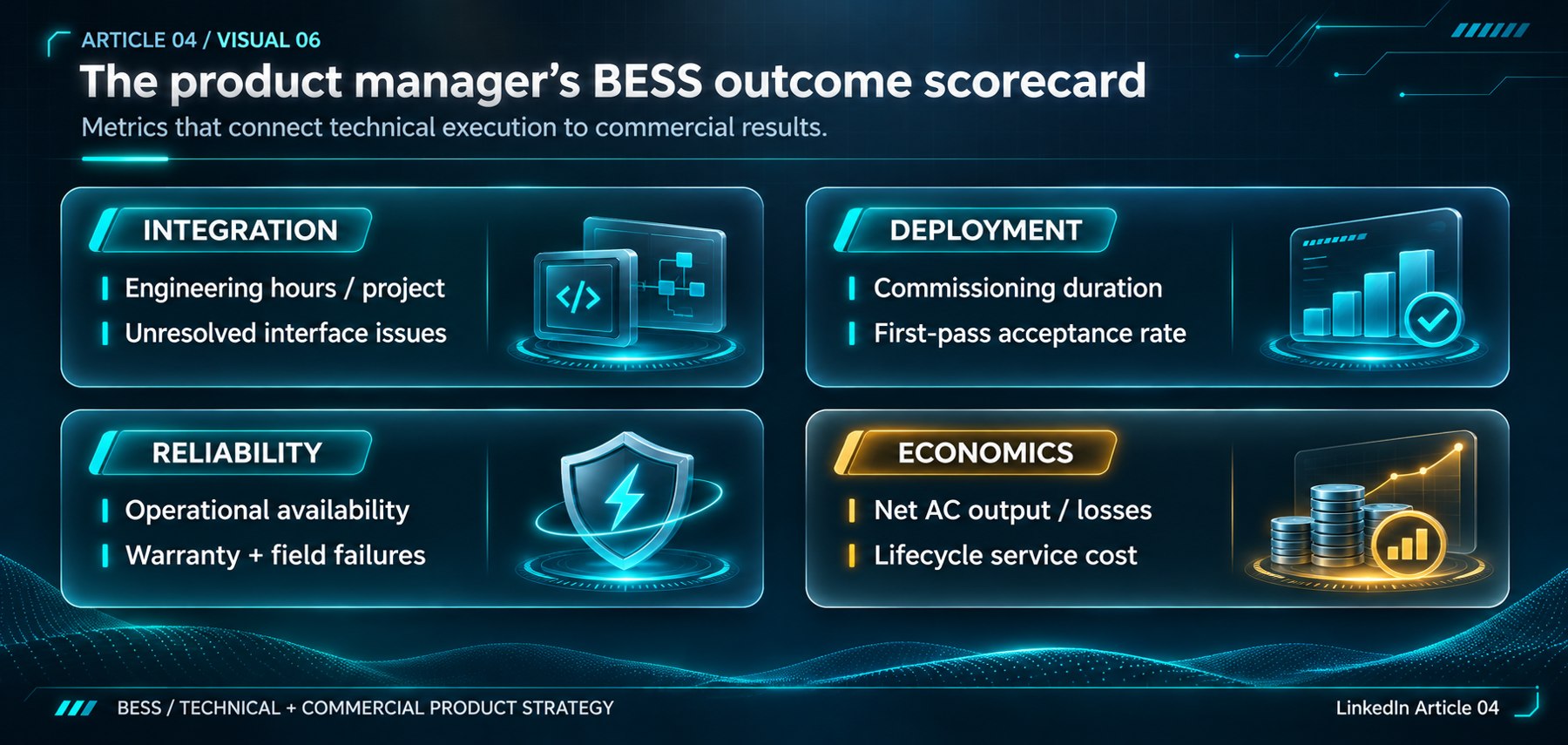
Rated efficiency and initial selling price belong on the scorecard, but they aren’t enough.
I’d also want to know:
- Integration: engineering hours and interface issues per project.
- Deployment: commissioning duration and first-pass acceptance rate.
- Reliability: availability, field failures, and warranty trends.
- Economics: delivered AC energy, losses, and lifecycle service cost. These metrics show whether a product is improving the whole customer experience, not merely passing factory tests.
They also help product managers prioritize the right investments: a design simplification, a supplier qualification, a new control feature, or a serviceability improvement.
Tracking these outcomes by product variant also reveals whether extra customization produces enough customer value to justify the added complexity.
The bigger opportunity
Battery chemistry will keep improving, but the competitive advantage in grid-scale storage won’t come from batteries alone.
It will also come from clear performance guarantees, well-matched electrical equipment, repeatable interfaces, and lower lifecycle risk.
That is where strong product management connects engineering decisions to commercial value.
What would you prioritize first in a new BESS product platform: standardized electrical interfaces, faster commissioning, or lower lifecycle operating cost?
Sources and further reading
- IEA, Global Energy Review 2026 — Battery Storage
- IEEE, IEEE 2800-2022
- UL Solutions, Understanding UL 9540A and NFPA 855
